Literacy in motion: Uganda’s digital-era pledge and a Community Learning Centre put to work

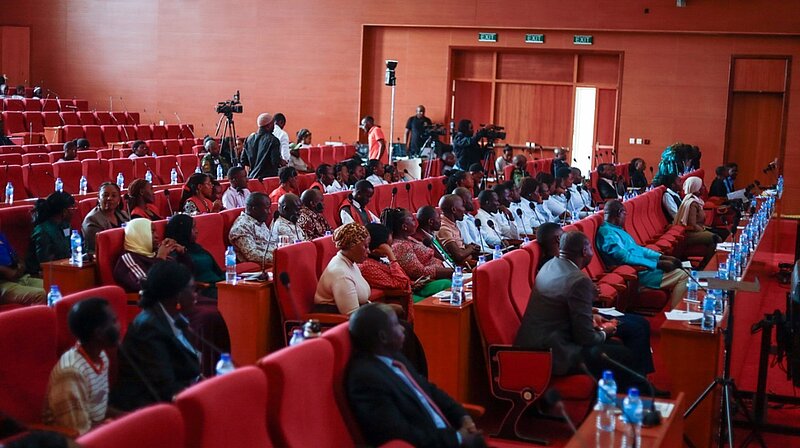
A group of people is seated in rows of chairs, facing forward.
Participants at the symposium held during the International Literacy Day on September 8

In our rapidly changing world, literacy stands as a fundamental pillar of progress, empowerment, and equality. As societies grow more interconnected and knowledge-driven, the ability to read, write, and critically engage with information has become an essential skill rather than a mere privilege.

On 8 September 2025, Uganda joined the rest of the world in commemorating International Literacy Day (ILD) under the global theme “Promoting Literacy in the Digital Era.” DVV International supported the Ministry of Gender, Labour and Social Development (MGLSD) in two key events: the ILD Symposium and the commissioning of a Community Learning Centre (CLC).

At the symposium, over 160 stakeholders from civil society, academia, government, and development partners discussed the urgent need for digital inclusion in literacy initiatives. Hosted by MGLSD, the event underscored that literacy must be practical, inclusive, and attuned to the digital landscape.

The guest of honour, Hon. Dr Peace Regis Mutuuzo, State Minister for Gender and Cultural Affairs, called on stakeholders to prioritise digital literacy, invest in infrastructure, and support government efforts so adult learning reaches those who need it most. She reaffirmed government commitment to community education, highlighting a national drive to establish Community Learning Centres and commending DVV International for its sustained support.

DVV International’s Regional Director, Frauke Heinze, reiterated the organisation’s long-term engagement in adult learning and community education in Uganda as part of a global effort to make literacy practical and useful in daily life. She noted that foundational literacy is the gateway to digital literacy and that Community Learning Centres are a vital platform for delivering these skills.

Advancing literacy and digital empowerment through Community Learning Centres in Uganda

DVV International supports CLCs and the Integrated Community Learning for Wealth Creation (ICOLEW) programme by working with MGLSD and district authorities to design and operationalise centres, train instructors and committees, and equip spaces for blended delivery. The support integrates foundational literacy with practical digital skills – basic device use, online safety, mobile money, and market information – while strengthening livelihoods through demonstration plots, value-addition training, and community radio for outreach. DVV International also assists districts with monitoring tools, mentorship, and small start-up inputs so learners can immediately practise new skills. A focus on gender and inclusion ensures women, youth, and rural learners can participate fully and turn their skills into better incomes and opportunities.

UNESCO’s perspective reinforced this shift: “To be literate today is to be digitally empowered,” said Mr. Charles Draecabo from the UNESCO Antenna Office, stressing the ability to access, evaluate, and create digital content safely and critically.

In a keynote address, Dr Dianah Nampijja from Makerere University quantified the challenge: about 24% of Ugandans – nearly 12 million people – still lack literacy skills. Only 28% of the population uses the internet, with a gender gap of 13% of women versus 24% of men. Her call was clear: integrate practical digital skills into literacy programmes and expand access to technology to close this “double exclusion”. Digital literacy, she emphasised, involves not only tools but also safety, learning culture, and media competence.

Symposium discussions echoed these views, urging human-centred design, ethical use, and locally relevant digital tools so rural and marginalised learners are not left behind. A panel discussion highlighted government and civil society efforts linking literacy with livelihoods through ICOLEW and REFLECT (Regenerated Freirean Literacy through Empowering Community Techniques). With DVV International’s technical and financial support – channelled through SUICOLEW (Support to Implementation of Integrated Community Learning for Wealth Creation) – districts are establishing and operating CLCs as local delivery platforms for adult learning, skills training, and enterprise support. National frameworks such as the National ICT Policy and the Education Digital Agenda Strategy provide the policy foundation for embedding digital literacy within these programmes.

Resolutions from the symposium focused on practical actions to advance literacy in the digital era. Stakeholders agreed to:

  • Integrate digital skills into adult literacy curricula, emphasising safety and critical use of online information.
  • Equip literacy instructors with digital competencies and ongoing support.
  • Expand affordable connectivity and infrastructure for blended and community-based learning.
  • Scale up and resource CLCs as hubs for community learning, digital access, and livelihoods—leveraging SUICOLEW for nationwide rollout.
  • Review and update the 2014 Literacy Policy to reflect digital realities and protect learners online.
  • Promote localised digital tools and content, including radio/online hybrids reaching rural learners.

On 10 September 2025 in Nyakagyeme, Rukungiri, DVV International’s Regional Director led a delegation to commission the Nyakagyeme Regional Model CLC. The delegation included the Chief Administrative Officer, LC5 Chairperson, and Resident District Commissioner, reflecting district ownership and coordination.

From policy to practice: commissioning the Nyakagyeme Community Learning Centre

At the centre, the CLC Management Committee (CMC) and sub-county team presented a progress report on enrolment, training areas (tailoring, computer basics, value addition), achievements, and needs. The Regional Director provided feedback and agreed on next steps with district leaders.

The tour showcased the digital dimension of literacy: a computer training room for digital skills and a community radio corner for outreach, learner mobilisation, and blended learning. Agricultural demonstration plots, value-addition stalls, and youth spaces illustrated how literacy links directly to enterprise and livelihoods.

The climax was the commissioning of the CLC by the Resident District Commissioner and DVV International’s Regional Director, transforming policy direction into a working hub for skills and livelihoods. District speeches reiterated how CLCs operationalise ICOLEW, linking functional literacy to household income and community development, with DVV International’s technical and financial support through MGLSD and SUICOLEW.

Building skills for better choices and livelihoods

Uganda’s message during the week was clear: everyone has the right to read and write, and literacy transforms lives. Digital literacy must be part of daily life, helping people find, understand, create, and safely use information online. The government reinforced this through its policies and partnerships. The symposium brought people together to share ideas, while the Nyakagyeme centre showed these ideas in practice. DVV International played a key role in both, supporting the government and local teams to empower learners, farmers, and entrepreneurs with skills for better choices and higher incomes.

The way forward is practical: align policies and funding with digital needs; train instructors in modern methods and technology; improve infrastructure and develop local tools so centres like Nyakagyeme can reliably offer blended learning. Support district leaders and involve communities, they are vital for relevance and accountability. Above all, listen to learners, as their experiences reveal whether the week’s messages are improving confidence, independence, and livelihoods.

The author

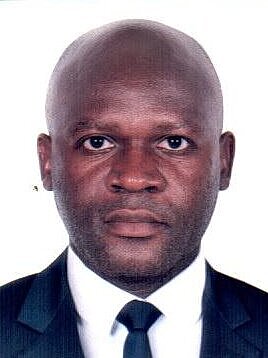
Portrait of a man.

Joseph Kifampa

Joseph Kifampa is Programme Manager at DVV International's office in Uganda.