Education builds bridges: From adult learning and education in Afghanistan to new beginnings in Germany
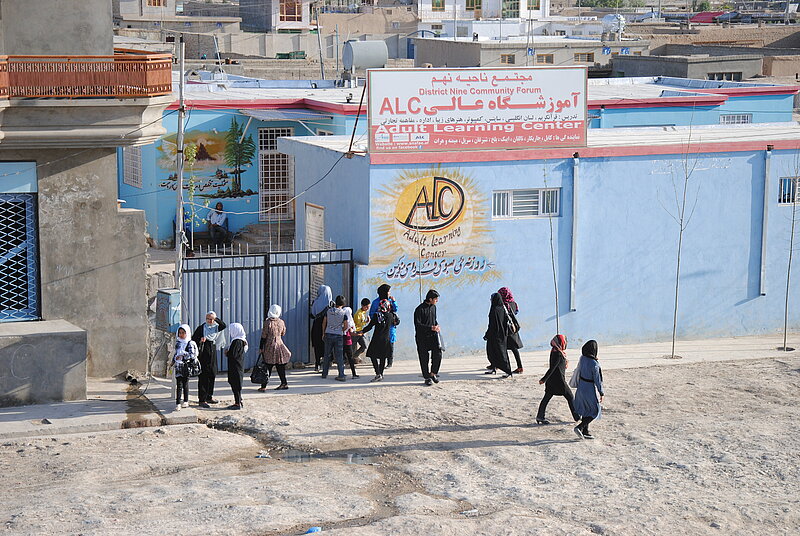
In 2005, DVV International began working with the Afghan National Association for Adult Education (ANAFAE) to support the development of adult learning and education (ALE) infrastructure in Afghanistan. By 2016, twenty-five adult education centres had been established across twelve provinces. However, when the Taliban came to power in 2021 they imposed restrictions, which drastically changed the lives of many people from one day to the next. These also hit the education sector hard: learning centres were closed, programmes discontinued, and women were largely excluded from educational opportunities and forced out of working life. Many people found themselves facing an uncertain future, both personally and professionally. Among them were ANAFAE staff, who felt particularly at risk due to their international connections. They were subsequently evacuated to Germany through the Ortskräfteprogramm (the German government’s resettlement programme for local staff). Their stories show the powerful impact that adult learning and education can have, not least across national borders.
Education across borders
Mohammad Assem Aqil, now 30, is originally from Kabul and currently lives in Jülich in North Rhine-Westphalia. In Afghanistan, after completing his studies he became head of the language department at an ALE centre in 2017 and quickly rose to become an integral part of the training team for all ANAFAE teachers. However, with the political changes in 2021, his work came to an abrupt end and he was forced to leave his homeland. In North-Rhine Westphalia, he quickly found his footing, supported by the region’s adult education provision. At the Jülich adult education center (Volkshochschule - vhs), he initially enrolled in the integration course and was so satisfied with the quality and teaching methods that he went straight on to the B2 and C1 German courses. “The vhs played a crucial role in my language learning and my successful integration into German society,” says Mohammed today. Having completed his second master’s degree in Germany, Mohammed is currently in the process of qualifying for a teaching post in a secondary school. His voluntary work has also been recognised by the state of North Rhine Westphalia through a regional scheme that rewards civic engagement. He is particularly grateful for his scholarship awarded by the German Academic Exchange Service (DAAD), which supported him financially for two years. Having successfully built a new life with his family in Germany, he is keen to contribute his professional experience for the benefit of the German education system and society as a whole.

Ameer Khan Ameer, 41, from Baghlan, worked for ANAFAE in Afghanistan for over ten years, where he held the position of Education Programme Manager, overseeing an education centre with more than 2,000 learners. Following his evacuation in 2022, he too began to build a new life for himself in North Rhine-Westphalia. Through integration programmes, he acquired German language skills up to B2 level and was determined to pursue his professional career in the field of education in his newly adopted home. At the same time, together with former ANAFAE colleagues, he founded the digital learning platform Train the Teachers to provide ongoing online training for teachers in Afghanistan, particularly women. Today he works as a teacher and job coach at GEBA mbH, a regional provider of vocational training, advice and job placement, where he supports refugees to access apprenticeships and the labour market. In 2025, he received the DAAD Prize for outstanding achievements by international students at German universities, in recognition of his master’s degree and commitment to social causes. “For me, this award reflects both the challenges I have overcome and my ongoing commitment to education, integration and social engagement since my arrival in Germany. […] The DAAD Prize is not only a personal achievement, but also a strong motivation to continue my work in the field of education and social development.”
In my experience – both in Afghanistan and here in Germany – access to education transforms lives.
– Husna Asadi
Husna Asadi is originally from Balkh Province and now lives in Frankfurt am Main. In Afghanistan, she worked as a project coordinator at ANAFAE after completing her master’s degree. However, following the change of government, she was no longer able to continue in her role. The sudden loss of her position brought her professional development and continuing education to a halt, along with her career prospects and dreams. After her arrival in Germany, Husna attended a welcome event organised by the local adult education centre (vhs) for all evacuees. She was also able to access suitable integration and language courses. “The vhs integration course was very helpful for me. It not only helped me to learn the language, but also supported me in navigating life in Germany. The atmosphere in the classroom was very friendly and supportive. This made it much easier to settle in and allowed me to look to the future in Germany with greater optimism.” To this day, lifelong learning continues to play an important role in Husna’s life: “Lifelong learning helps me to stay motivated, build self-confidence and prepare for new opportunities, so that I can continue to develop professionally and personally, even in difficult times. […] In my experience – both in Afghanistan and here in Germany – access to education transforms lives.”

Sayed Mohibullah Mohib, who is in his mid-thirties, has also remained in the education sector and now lives in Steinfurt. In Afghanistan, alongside his teaching work, he gained internationally recognised qualifications through ANAFAE. Through his efforts, ANAFAE became the first educational institution in Afghanistan to be granted a licence for the internationally recognised TESOL programme for training English language teachers. His journey to Germany was marked by uncertainty, but also by hope. Upon his arrival, he prioritised integration, professional orientation and building a new life for himself. Today, he teaches English at B1 level at the Steinfurt adult education centre. He also completed his master’s degree and helped establish the digital learning platform “Train the Teachers”. In addition, he volunteers his time, including teaching German at A2 level, to actively support integration and adult learning and education. “In my view, adult education is vital for social development, as it empowers people, fosters social cohesion and enables equal participation,” says Sayed. “It opens up educational opportunities, supports integration and equips people with the skills to navigate social, economic and technological change.”
Adult learning and education: A connecting force
These stories are testament to the fact that professionals working in ALE have the potential not only to integrate successfully into German society but also to make a significant contribution to local educational opportunities. Their trajectories also illustrate what adult learning and education can achieve: it equips, empowers and provides stability, particularly for those in times of crisis and in need of a fresh start. Those who once worked to strengthen learning spaces in Afghanistan are now helping to shape integration courses, language programmes and career guidance in Germany. Adult Education has thus become a bridge, spanning countries, life stories, and past and future. In a world of political upheaval and crises, it continues to be a reliable anchor: for participation, for democracy, and for the belief that learning never ends.
These four stories describe successful integration under the Ortskräfteprogramm. Yet to this day, many Afghans are still waiting for the admission they were promised or are receiving unfounded rejections. For many of those affected, a safe arrival in Germany therefore remains uncertain.
Die Autorin