


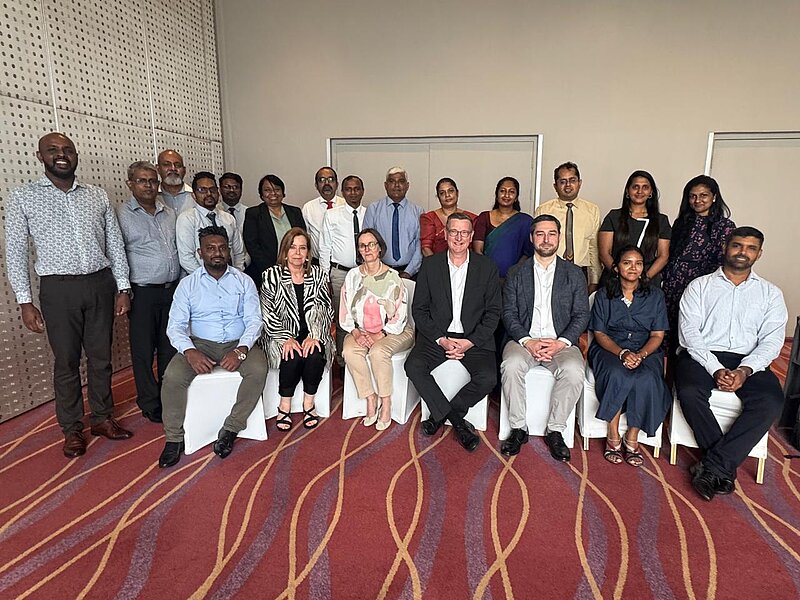
DVV International’s project work in Sri Lanka is still in its early stages: The Regional Office for South Asia was only established at the end of 2023. Since then, the team has been collaborating with its partners to reinforce the national adult learning and education (ALE) system and to provide disadvantaged population groups with access to tailored educational opportunities. During their visit from 11 to 15 May, Martin Rabanus and Arne Zielinski gained first-hand insight into the work being carried out on the ground.
Sri Lanka’s education indicators are very good compared to other countries in South Asia, particularly in terms of literacy and school completion rates. However, ALE predominantly takes place in the non-formal sector, and a coherent system does not yet exist. In the field of non-formal vocational education in particular, the landscape of stakeholders and programmes is fragmented and confusing. This often makes access difficult for participants.
This is where DVV International’s work comes in. During the five-day trip, the delegation gained a comprehensive understanding of the various levels of work and areas of activity. At a high-level exchange event with representatives from the ministries of education, agriculture and fisheries, as well as subordinate research and vocational education agencies, access routes, learning pathways and potential synergies were discussed. Martin Rabanus's presentation on the German adult education system, its political foundations and the underlying educational concept generated great interest.
Insights into ALE in practice
As the trip continued, the delegation learned about various components of the adult education system – from village-based initiatives for fish processing to a regional training and research center in the fisheries sector, and a visit to a vocational school together with the mayor of Colombo. This highlighted both the diversity of existing programs and their potential for greater collaboration.
In the coming years, DVV International will work with its partners to better coordinate these programs, improve access – particularly for new target groups such as young adults without a high school diploma or vocational training – expand value chains, and develop training materials tailored to specific needs.